

The EU digital product passport: what it requires, and when
By Nacho Uribarri, CEO and co-founder of Aurea · Last updated . Every date here is read off the regulation or the European Commission, and linked. Where the Commission hedges, so does this page.
From 2027 a growing list of products sold in the European Union will have to carry a digital record of what they are made of, where they came from and how to repair, resell or recycle them. This page sets out what the passport is, which regulation creates it, which products it reaches and from when — and one thing most explanations leave out: what the carrier on the product can and cannot prove.
01 / Definition
What a digital product passport is
- 20 Jul 2026The DPP registry became operational
- 18 Feb 2027Batteries — the first passport with a date fixed in law
- Q4 2027Planned adoption of the delegated act for textile apparel
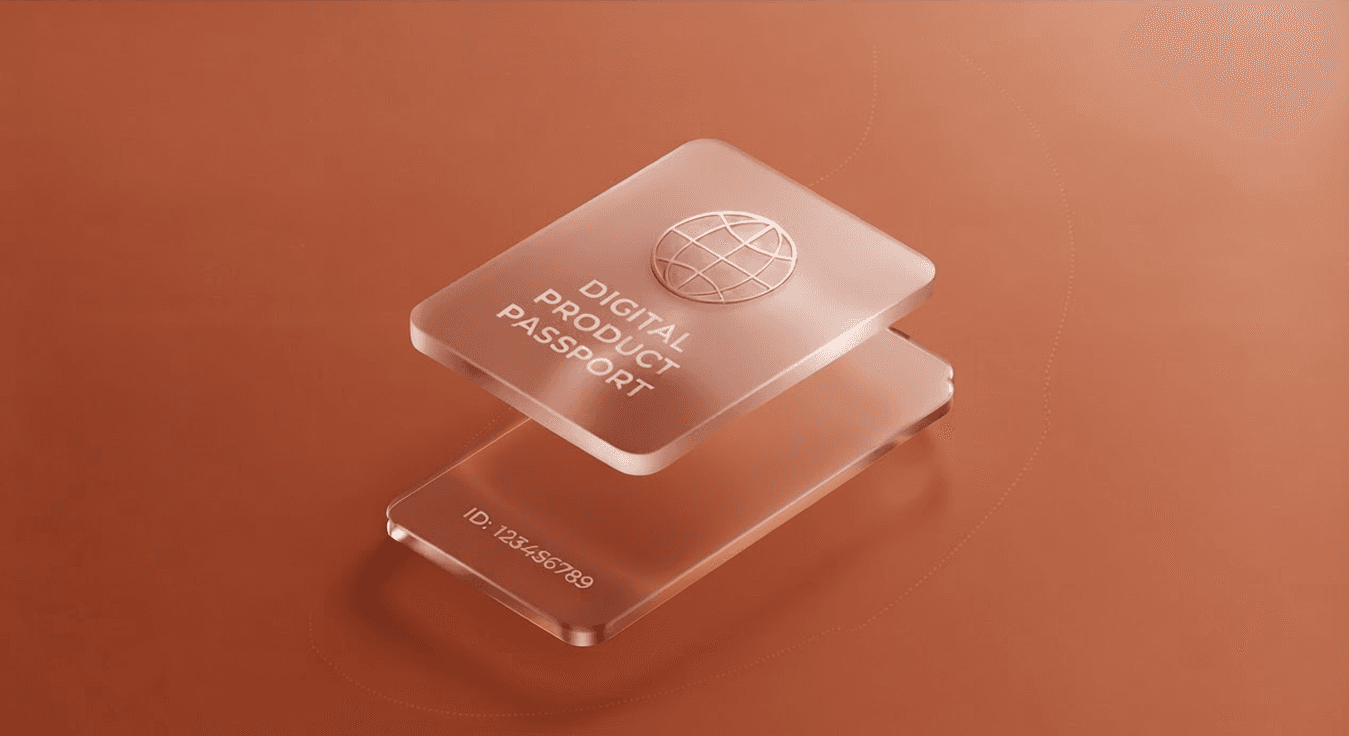
The European Commission defines it as a digital container for products, components, and materials, which will store relevant information to support products’ sustainability, promote their circularity and strengthen and facilitate legal compliance
. In practice: a record attached to a physical product and reachable from it, holding whatever information the rules for that product group require.
It is created by Regulation (EU) 2024/1781, the Ecodesign for Sustainable Products Regulation — ESPR — adopted on 13 June 2024 and published on 28 June 2024, with the passport set out in Chapter III, Articles 9 to 15.
The single most misunderstood thing about it: the ESPR does not impose a passport on anything by itself. It is a framework. The obligation arrives product group by product group, through delegated acts that the Commission adopts one at a time — which is why there is no one date, and why any source that gives you one has simplified something away.
Sources: Regulation (EU) 2024/1781, EUR-Lex · European Commission, Digital Product Passport
02 / Timeline
Which products, and from when
The first ESPR working plan, adopted in April 2025, named the priority groups: steel and aluminium, textiles with a focus on apparel, furniture, tyres and mattresses, alongside a number of energy-related products. The sequence below is the Commission’s own indication by group. It is written in years rather than dates because for most of these groups the delegated act does not exist yet, and a precise date would be invented.
| Product group | When | What the date actually is |
|---|---|---|
| Iron and steel | 2026 | The delegated act is planned for adoption in Q4 2026. First in the Commission's sequence. |
| Energy-related products | 2026–2029 | Indicative, product by product. |
| Batteries | 18 February 2027 | The only passport with a date fixed in law rather than an indication — and it comes from the Batteries Regulation, not the ESPR. Applies to electric-vehicle and light-means-of-transport batteries, and to industrial batteries above 2 kWh. |
| Construction products | Q2 2027 | Planned delegated act under the Construction Products Regulation, not the ESPR. |
| Textiles, tyres, aluminium | 2027 | Delegated acts planned for Q3–Q4 2027. For textile apparel the Commission gives Q4 2027 — adoption, not application. |
| Furniture | 2028 | Planned adoption of the delegated act. |
| Mattresses and ICT products | 2029 | Indicative. |
| Cement | not earlier than 31 December 2028 and not later than 1 January 2030 | One of the few windows written into the regulation itself (Article 18): the period for adopting the delegated act, if the Construction Products Regulation has not covered cement by then. |
| Toys, detergents, packaging | Set by their own regulations | The Commission lists them as standalone legislation that carries a passport; its DPP page gives no date for them. |
One caveat matters more than the table, and it is the Commission’s own wording: implementation timelines may evolve as legislative and technical work progresses
. Treat every row above except batteries as a plan, not a deadline.
A second sentence from the Commission changes how every row should be read: after an ESPR delegated act is adopted, economic operators will have a transition period of at least 18 months
. The regulation says the same in Article 4: a delegated act cannot apply earlier than 18 months after it enters into force, except in duly justified cases. An adoption date is therefore not the date the obligation starts.
Textiles and apparel
The delegated act that will define the requirements for textile apparel is planned for adoption in Q4 2027. That is when the rules get written, not when they start applying to products — the application date will be set inside the act itself. Brands planning for this should read Q4 2027 as the moment the requirements become knowable.
Add the 18-month transition and an act adopted in Q4 2027 would start applying no earlier than mid-2029. That is arithmetic on two statements by the Commission, not a date it has published.
What a textile passport may have to carry, per the Commission, with their hedge kept intact — the exact requirements will be set by the delegated act:
- Product identification and characteristics
- Fibre composition, as required under the Textile Labelling Regulation, where relevant for the DPP
- Information supporting use, repair and maintenance
- Information relevant to reuse, resale, disassembly, refurbishment, disposal at end-of-life and recycling
- Origin information
- Identification of relevant economic operators
Who has the obligation
It falls on the economic operator placing the product on the EU market or putting it into service in EU territory. Distributors and dealers also have to ensure a passport is available for the products they distribute or deal with in the EU market — so it is not only the manufacturer’s problem.
Sources: European Commission, Digital Product Passport · European Commission, Textile apparel and the Digital Product Passport · First ESPR and Energy Labelling Working Plan, COM(2025) 187 final
03 / The registry
The DPP registry, live since 20 July 2026
The registry is the one part of the system that already exists. The Commission describes it as the indexing service for all Digital Product Passports of products placed on the EU market
, and it has been operational since 20 July 2026.
It does not hold the passports. It stores the unique identifiers, registration data, and high-level metadata for each product, rather than the full detailed product information contained in the DPP itself
. The complete product information stays with the economic operator or with a DPP service provider.
What it changes in practice: before a product can be placed on the EU market, the relevant economic operator must register its DPP in the Registry in accordance with the applicable legislation
. Customs authorities then check electronically that an imported product has a valid registered passport before releasing it. As with the passport itself, the duty to register arrives with each product group’s own rules.
Its rules are in Commission Implementing Regulation (EU) 2026/1778 of 16 July 2026, adopted under Article 13 of the ESPR, published the next day and in force since 6 August 2026. Only verified economic operators can register passports, and each Member State has to designate a national administrator by 18 February 2027.
Sources: European Commission, the DPP Registry · Implementing Regulation (EU) 2026/1778, EUR-Lex
04 / The carrier
The data carrier: what a QR code or an NFC chip can prove
The regulation requires a data carrier on the product that gives access to the information, and the Commission’s own example is a QR code. So, plainly: NFC is not required, and a printed QR code is compliant. Anyone telling you the passport obliges you to buy a chip is selling you something.
What the carriers differ on is not compliance. It is what they can prove. A QR code is a printed pattern: it can be photographed and reprinted onto anything, including a counterfeit of the product it came from. Both items then resolve to the same passport, and the passport is telling the truth about a product — just not about the item in your hand. The regulation is satisfied. The buyer is not protected.
That gap is not a flaw in the ESPR, which was written for circularity and not for anti-counterfeiting. It is simply a different problem that happens to arrive on the same label. A tamper-evident chip bonded to the product carries the passport and, because it cannot be cloned or moved to another item without showing it, also answers the question the QR cannot: is this the product the record describes.
Which is the whole of Aurea’s position on this, and worth stating without inflation: you do not need us to comply. You need us if you want the same carrier to do compliance and authenticity at once, rather than printing a QR for the regulator and solving counterfeiting separately.
Sources: European Commission, on the data carrier · What counterfeiting costs, by sector
05 / FAQ
Frequently asked questions
The European Commission defines it as “a digital container for products, components, and materials, which will store relevant information to support products’ sustainability, promote their circularity and strengthen and facilitate legal compliance”. In practice it is a record attached to a physical product and reachable from it, holding the information a regulation requires for that product group.
Regulation (EU) 2024/1781 — the Ecodesign for Sustainable Products Regulation, or ESPR — adopted on 13 June 2024 and published on 28 June 2024. Chapter III, Articles 9 to 15, covers the digital product passport. The ESPR is a framework: it creates the passport but does not by itself impose it on any product. That happens product group by product group, through delegated acts.
There is no single date, and any source giving you one is simplifying. Batteries are first, with a passport required from 18 February 2027 under the Batteries Regulation. For everything under the ESPR the obligation arrives with each product group’s delegated act, and economic operators then have a transition period of at least 18 months. The Commission’s indicative sequence runs iron and steel in 2026, textiles, tyres and aluminium in 2027, furniture in 2028, mattresses and ICT products in 2029. The Commission states that implementation timelines may evolve as legislative and technical work progresses.
Under the ESPR, the Commission’s sequence names iron and steel, energy-related products, textiles, tyres, aluminium, furniture, mattresses and ICT products. Other products get a passport through their own legislation: batteries, construction products, toys, detergents and packaging. A product needs a passport only once the act for its group has been adopted and its transition period has run.
The digital passport required by the Batteries Regulation, Regulation (EU) 2023/1542, separately from the ESPR. From 18 February 2027, every electric vehicle battery, every light means of transport battery and every industrial battery above 2 kWh placed on the EU market must have one, reached through a QR code on the battery. It is the first passport with a date fixed in law.
The delegated act that will define the requirements for textile apparel is planned for adoption in Q4 2027. That is the date the rules get written, not the date they start applying to products — the application date will be set inside that act, and with the transition period of at least 18 months it would fall no earlier than mid-2029. Textile apparel is one of the priority groups in the first ESPR working plan, adopted in April 2025 alongside steel and aluminium, furniture, tyres and mattresses.
The EU database that indexes every digital product passport. It has been operational since 20 July 2026 and stores unique identifiers, registration data and high-level metadata — not the full passport, which stays with the economic operator or a DPP service provider. Before a product is placed on the EU market its passport has to be registered, in accordance with the legislation for that product group. Its rules are set by Commission Implementing Regulation (EU) 2026/1778.
No. The regulation requires a data carrier on the product that gives access to the information, and the Commission’s own example is a QR code. NFC is one valid carrier among others, not a requirement. What distinguishes the carriers is what they can prove: a printed QR code can be photographed and reprinted onto a counterfeit, which satisfies the passport rules while proving nothing about the item it is attached to.
The obligation falls on the economic operator placing the product on the EU market or putting it into service in EU territory. Distributors and dealers also have to ensure a passport is available for the products they distribute or deal with in the EU market.

06 / Sources
Sources
- 01Regulation (EU) 2024/1781 (ESPR), of 13 June 2024
- 02Regulation (EU) 2023/1542 on batteries and waste batteries, of 12 July 2023
- 03Commission Implementing Regulation (EU) 2026/1778 of 16 July 2026, on the digital product passport registry
- 04European Commission — Digital Product Passport
- 05European Commission — The DPP Registry
- 06European Commission — Textile apparel and the Digital Product Passport
- 07First ESPR and Energy Labelling Working Plan, COM(2025) 187 final of 16 April 2025
- 08European Commission — Ecodesign for Sustainable Products Regulation
This page is not legal advice. It reproduces what the regulation and the European Commission publish, with the dates and the hedges they use. The requirements that will actually apply to a given product are the ones in its delegated act, and for most groups that act has not been adopted yet.